
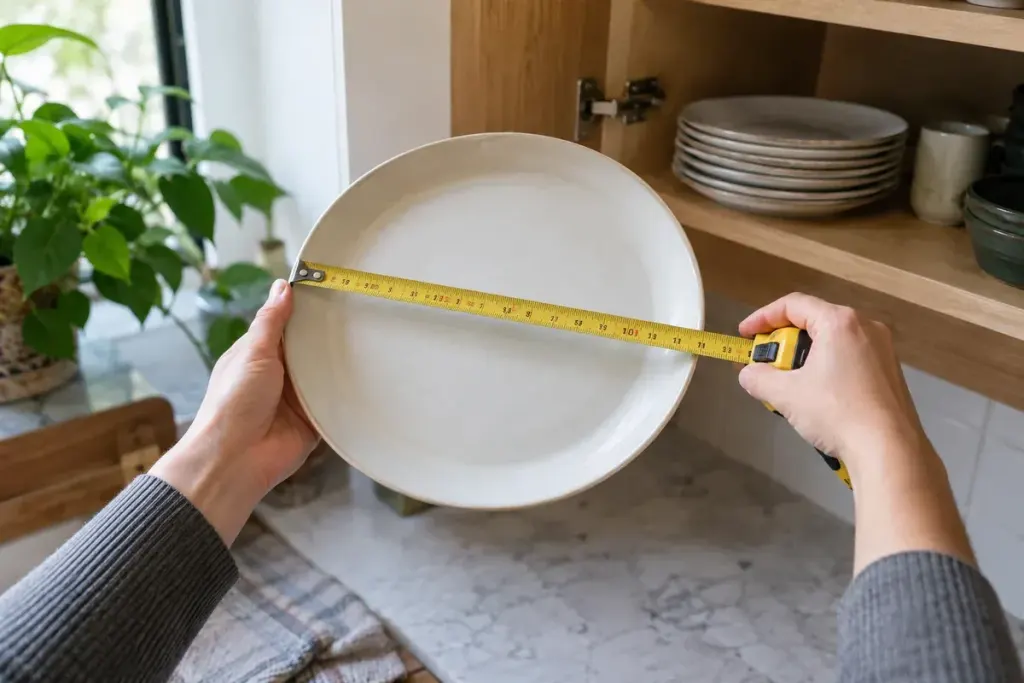
A plate can look perfect on a shop display and still be awkward in your kitchen. It may sit too tall in the dishwasher, extend beyond a shelf or feel heavy when several are stacked. Before choosing a dinnerware set, measure the places the plates will actually live.
Start with the cupboard, dishwasher rack and table. If you regularly use a microwave, check its usable space too. A diameter alone does not describe the rim, depth or way a plate sits between rack supports.
Compare one plate before buying a stack
Where practical, inspect a single sample or check the return policy before committing to a full set. Hold it as you would when serving, washing and putting it away. A wide rim can be useful to grip but leaves a different eating area from a similarly sized plate with a narrow rim.
Try stacking comparable pieces and consider the total weight. The comfortable choice depends on who will use them. Do not assume that a heavy plate is automatically more durable or that a very light one is unsuitable.
Read care information for the exact item
Manufacturer descriptions should distinguish material, dimensions and permitted uses. For example, an IKEA 365+ plate listing provides dimensions and microwave/dishwasher care information. This is an example of the details to look for, not a claim that all porcelain or all plates from one range behave identically.
Check decorated finishes and metallic details individually. Dishwasher-safe does not necessarily answer questions about oven use, thermal shock or every cleaning product. Follow the instructions rather than inferring one permission from another.
Think about an ordinary week
List the meals you serve most often. A shallow plate may suit some meals, while a bowl is more convenient for others. Buying many specialised shapes can fill storage without improving daily use. Start with the pieces that earn their space.
Consider replacement availability and whether individual pieces can be purchased later. A set that is economical initially may be less convenient if one broken plate forces a much larger purchase. Availability can change, so check at the time you buy.
Use a short comparison note: usable size, stack height, weight in the hand, care requirements and replacement options. Those practical details often matter more over a year of daily meals than how impressive the complete set looks in a photograph.