
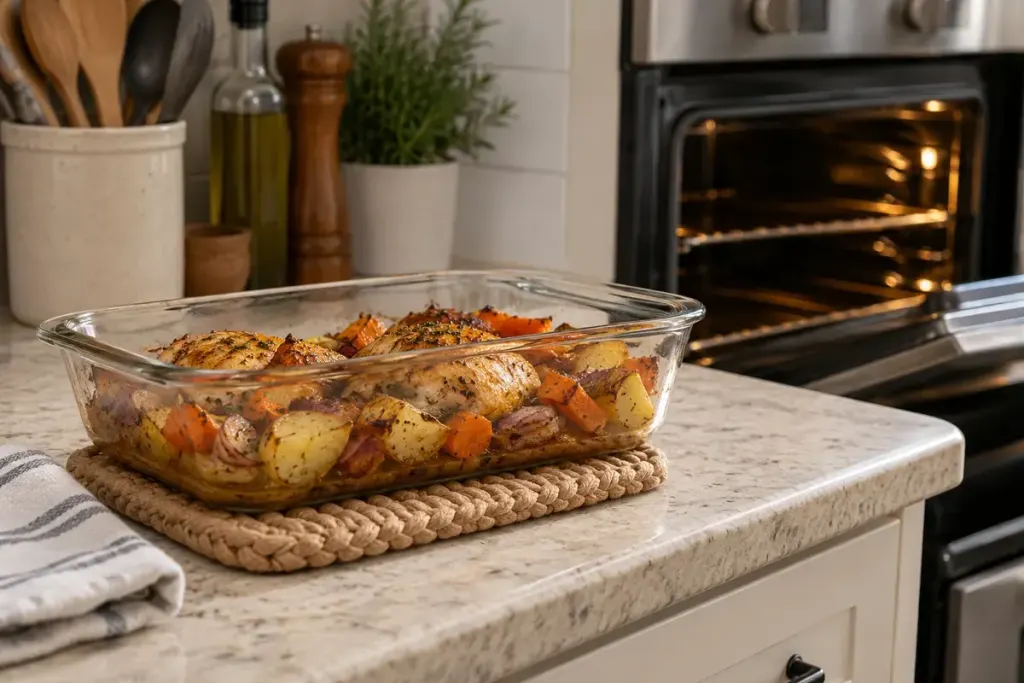
A dish can be rated for oven use and still need careful handling when temperatures change. Uneven or rapid temperature changes can stress glass. The word oven-safe should be read together with the manufacturer’s complete use instructions.
Pyrex’s safety and usage information sets out precautions for its products. Different glass formulations and product ranges have different limits, so identify your exact dish rather than applying a rule remembered from another brand or country.
Prepare the landing place first
Before opening the oven, have a suitable dry heat-resistant surface ready. Follow the product guidance about trivets and surfaces. Do not discover after lifting a hot dish that the only free space is wet or unsuitable.
Use dry protective handling equipment and keep people clear of the route. Check the dish for damage before cooking and stop using chipped or cracked items according to the manufacturer’s instructions.
Avoid sudden changes during use
Do not add cold liquid to hot glass or move it between extreme conditions unless the exact product instructions explicitly permit the procedure. Stovetop, grill, broiler and freezer-to-oven use are separate permissions; one should not be inferred from another.
Allow the dish to cool as directed before washing. A cool-looking handle does not establish that every part of the glass is ready for cold water.
For a shared kitchen, keep the care instructions accessible and identify lids separately. A plastic lid, glass lid and base may have different temperature limits even when sold together.
If breakage occurs, keep people away from hot food and fragments and discard food that may contain glass. Careful temperature handling cannot make damaged bakeware reliable. The useful habit is to plan the whole journey—from storage to oven to resting place to washing—around the actual product’s limits.