
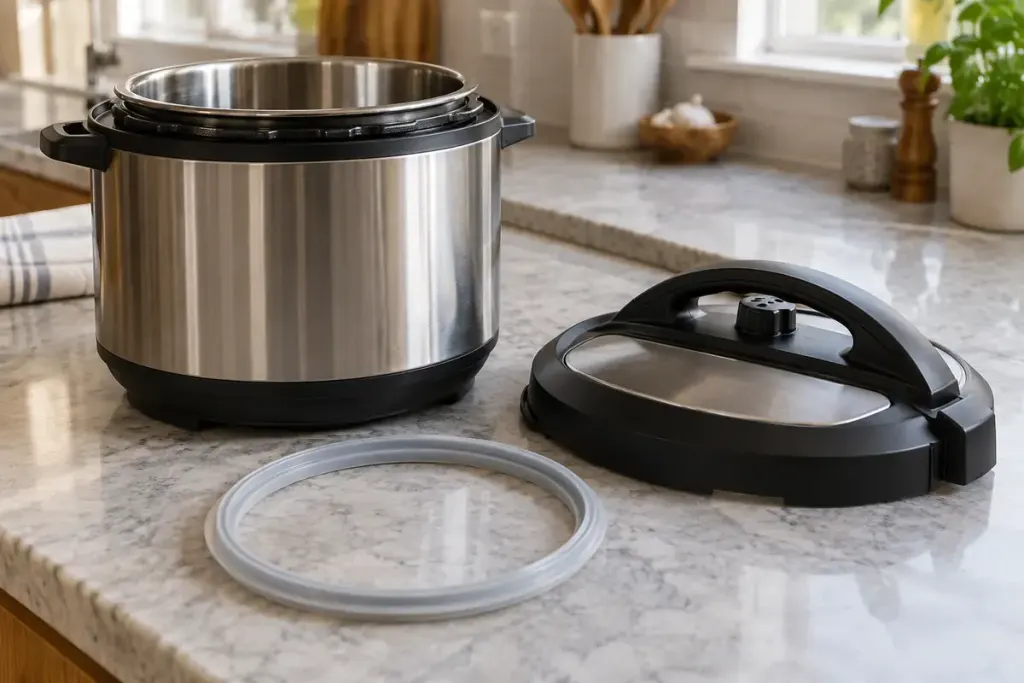
A silicone ring may look like a simple replacement part, but in a pressure cooker it belongs to a specific sealing system. Approximate diameter and a familiar colour are not enough to establish compatibility.
Instant Pot’s sealing-ring information identifies the intended cooker size and treats the ring as part of the safety mechanism. Use the manufacturer’s compatibility information for your exact appliance rather than assuming every ring for the same advertised capacity fits.
Identify the appliance before ordering
Record the model, capacity and relevant product code from the appliance and manual. Check the replacement part number and any restrictions. A marketplace title containing several brands does not replace documented compatibility.
Inspect the existing ring only when the cooker is depressurised, cool and safe to handle. Follow the manual’s removal and cleaning procedure. Look for damage, stretching, poor seating or other conditions the manufacturer says require replacement.
Do not improvise a seal
Do not cut, glue, pack or modify a ring to make it fit. Do not defeat a pressure safety device because the lid will not seal. If the appliance leaks unexpectedly or behaves abnormally, stop using it and follow the manufacturer’s troubleshooting or service route.
When fitting an approved replacement, check that it sits in the correct retainer without twists. Use the manufacturer’s prescribed checks before cooking. A successful previous meal is not proof that a damaged or incorrect part remains safe.
Keep the part’s packaging or purchase record with the appliance details so the next replacement does not begin with guesswork. Cleaning and replacement intervals depend on the product instructions and condition. The useful habit is exact identification followed by correct fitting—not trying to stretch the life of a small part whose job is essential to the whole cooker.