
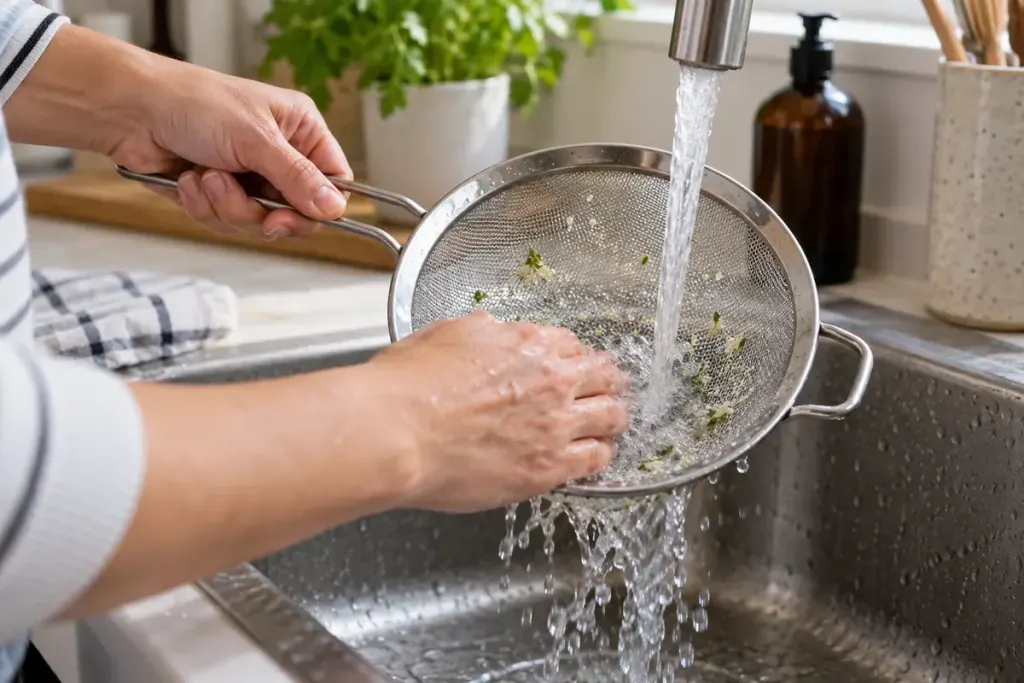
A colander lets most rinse water pass through wide openings. A fine-mesh sieve gives food many smaller places to lodge, especially where the mesh meets the rim. The same quick rinse may leave a very different result.
Check the utensil’s care instructions before choosing a method. Stainless steel mesh, a plastic frame, wooden handles and attached seals may have different temperature or dishwasher limits. The word sieve describes its job, not every material used to build it.
Loosen residue without changing the mesh
Empty food promptly and, where the instructions allow, rinse before residue dries in place. Work from both sides so water can reach material trapped against the mesh. Use a suitable soft brush rather than a sharp implement pushed through individual openings.
If permitted, a short soak in warm washing-up water can help loosen residue. Do not leave a tool soaking indefinitely, particularly when handles or joints are not designed for immersion. Rinse away detergent and inspect the whole surface in good light.
Pay attention to the rim. A sieve can look clear in the centre while retaining food around its edge. Clean that join gently without prying the mesh away from its support.
Check condition before the next task
A bent or torn mesh is not just a cosmetic issue. It may no longer strain as intended, and damaged wire can be sharp. Replace a damaged utensil rather than trying to hide the fault beneath another layer of mesh.
Allow the sieve to dry fully before putting it into a crowded drawer. Store it where heavier pans will not crush its bowl or distort the rim. If it is dishwasher-safe, follow the manufacturer’s loading guidance and check that the cycle reached the surfaces that needed cleaning.
For jobs involving allergen separation or stricter hygiene requirements, follow the relevant kitchen procedures; ordinary visible cleanliness is not proof that every residue has been removed.
A quick inspection before storage saves discovering yesterday’s dried flour or seeds when the next recipe is already under way.