
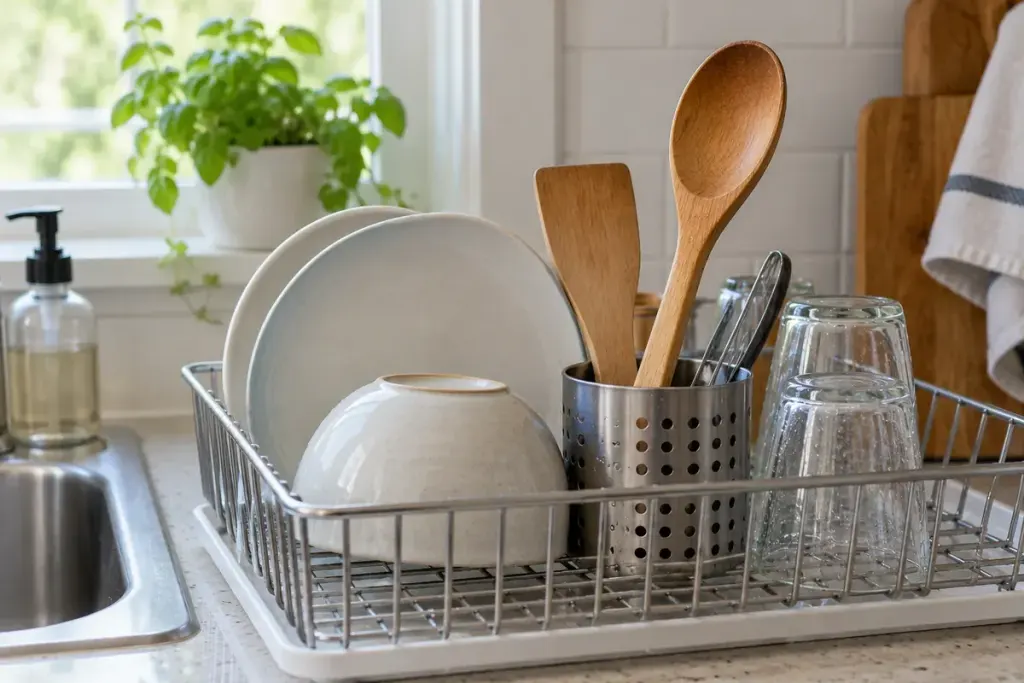
A wooden spoon can look dry at the handle while moisture remains where several utensils touch in a crowded pot. After washing, the storage arrangement matters as well as the cleaning step.
Follow the manufacturer’s care guidance for the particular utensil. Solid wood, laminated products and coated pieces may have different requirements. Do not assume that every wooden item is suitable for a dishwasher or prolonged soaking.
Clean, inspect and separate
Wash as directed and remove food from the bowl, edges and any joins. Check for cracks, splinters, damaged coatings or a surface that has become difficult to clean. A familiar utensil should not remain in use merely because it has always been part of the kitchen.
After washing, give pieces space so air can reach their surfaces. Avoid stacking wet spoons tightly or returning them immediately to a closed drawer. Dry the holder or tray too if it has collected water.
Do not improvise a treatment
If the maker recommends periodic conditioning, use the specified food-contact-suitable product and method. A household oil, furniture polish or scented treatment is not automatically appropriate for a cooking utensil.
Likewise, do not use heat as a shortcut unless the care instructions permit it. A radiator, oven or strong direct heat can create a different problem from the moisture you wanted to remove.
For a shared kitchen, keep care straightforward enough that the next person can follow it. A designated drying area is more reliable than hoping everyone remembers which drawer should stay open.
The aim is a clean, sound utensil that is dry before storage. If you cannot confidently clean a cracked or damaged piece, replace it or seek the manufacturer’s advice. A simple inspection during washing makes that decision easier than discovering the problem while stirring food.