
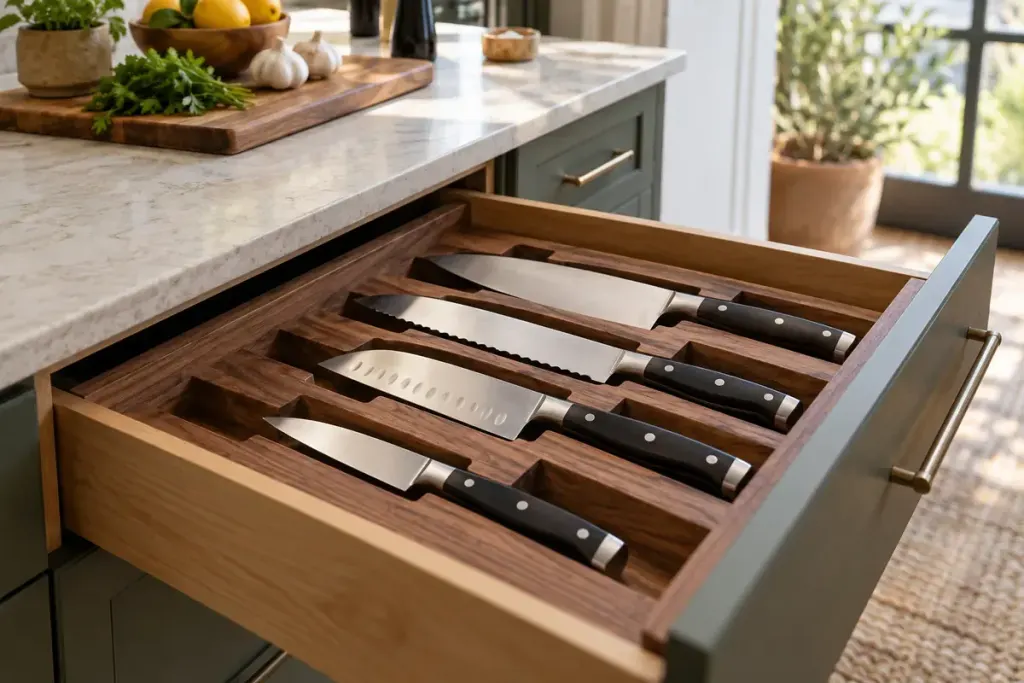
A drawer full of utensils can hide a sharp blade beneath a spoon. Better storage begins with how someone reaches for the tool, not just how neatly the drawer looks when photographed.
Make the handle the obvious contact point
Choose a storage method suitable for the tools and household: a fitted drawer insert, a stable block or another manufacturer-approved arrangement. The blade should be protected and the handle identifiable without rummaging among loose edges.
Check fit rather than assuming that every slot suits every knife. A tool that sits awkwardly or protrudes into the drawer’s movement needs a different arrangement. Keep frequently used items within comfortable reach so retrieving one does not require leaning over other hazards.
Think about everyone who uses the kitchen
Children, visitors and people unfamiliar with the drawer may not know where a loose sharp item is hidden. Use secure storage appropriate to the household. A magnetic strip, for example, requires suitable installation, reliable retention and a location that does not expose vulnerable users to the blades.
Follow the storage product’s load and mounting instructions. If installation involves uncertain fixings or a difficult surface, get appropriate help instead of relying on an improvised adhesive solution.
- Store tools clean and dry according to their care instructions.
- Keep loose blades out of general utensil piles.
- Check that drawers close without contacting the tools.
- Tell other users when the storage arrangement changes.
During cleanup, do not leave sharp tools concealed in washing-up water. Establish a visible, controlled handling routine and avoid reaching blindly into sinks or containers.
Test the final arrangement slowly with the empty storage system first, then with tools placed correctly. Can you identify the intended handle without moving another blade? Can the tool be removed without catching? A useful organisation system makes the safe action easy to recognise every time, not only immediately after tidying.