
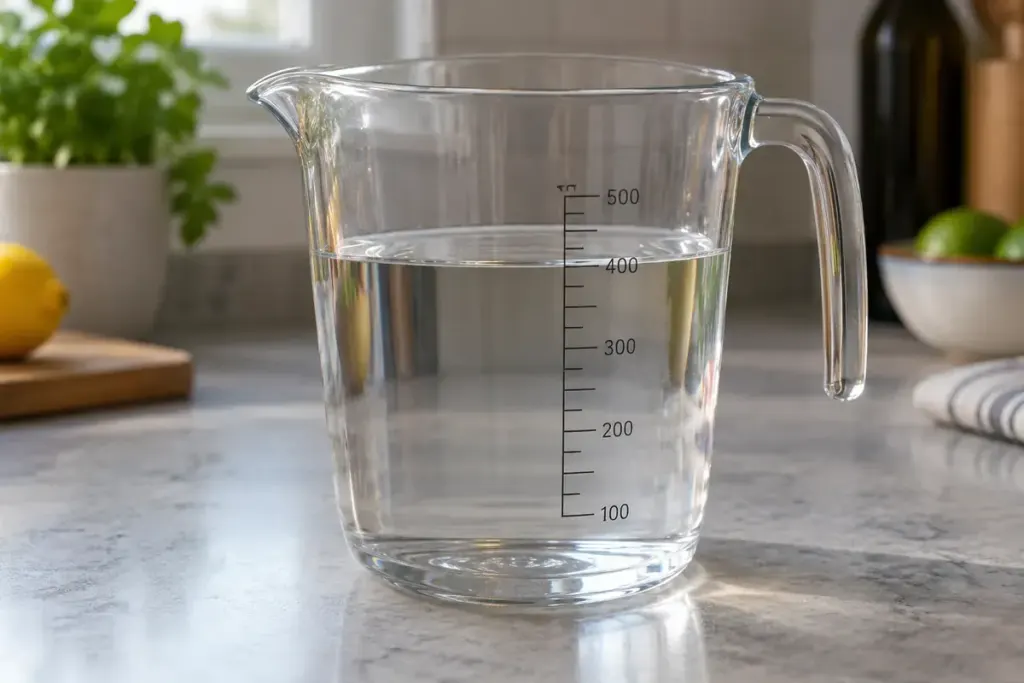
You pour to the line, lift the jug and discover that the liquid now appears to sit somewhere else. The recipe has not changed. The angle from which you are reading the scale has.
A measuring jug is convenient, but it cannot correct a tilted surface or a mistaken unit. Before buying a more elaborate one, check the small habits that determine what you actually put into the bowl.
Choose the scale before pouring
Find the unit in the recipe and the matching markings on the jug. Millilitres, cups and fluid ounces are not interchangeable labels. Cup sizes and fluid-ounce conventions can differ between recipe sources, so use the stated measurement system rather than assuming every cup mark means the same amount.
Also distinguish volume from weight. A line marked for liquid volume does not tell you how many grams of flour are inside. If the recipe gives a weight, a suitable kitchen scale removes that particular conversion problem.
Set it down, then read
Place the jug on a stable, level worktop. For an ordinary side-marked jug, lower your eye to the liquid level rather than holding the jug in the air. Follow the maker’s reading instructions; some angled designs are intended to be read from above.
With clear water in a conventional jug, the surface may curve against the sides. Read the bottom of that curve at eye level where the jug’s instructions call for it. Foam, opaque ingredients and thick sauces can make that approach less useful, so allow bubbles to settle and use the appropriate method for the ingredient.
Do not bring your face close to hot liquid to inspect a line. Use heat-rated equipment, a stable position and a safe viewing distance.
Notice what remains in the jug
Water pours away readily; honey and thick syrup leave a coating. Use the recipe’s method for transferring sticky ingredients, including scraping when instructed, so a visibly correct measurement does not become a smaller amount in the mixing bowl.
As a simple practice exercise, measure a small amount of cool water from above, then check it at the intended reading angle. The difference makes the issue easier to remember. Accurate measuring starts with a repeatable view, not a cupboard full of additional gadgets.