
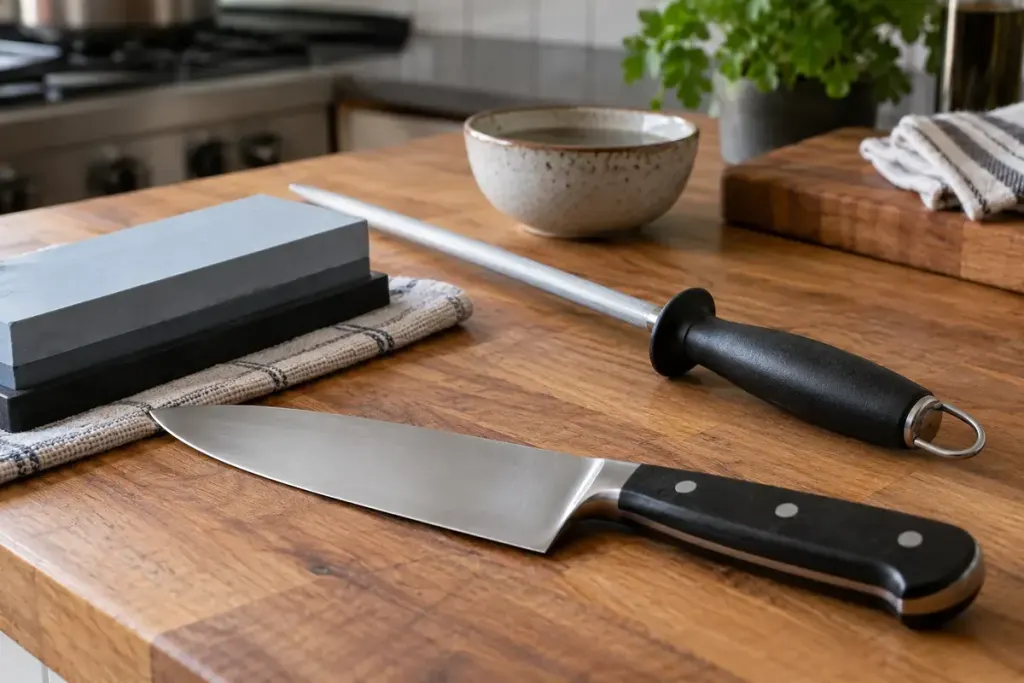
A knife begins to struggle with a tomato skin, and someone recommends “a few passes on the steel.” Before doing that, identify the tool and the knife. Honing and sharpening are related maintenance tasks, but they are not identical operations.
WÜSTHOF’s knife-care guidance distinguishes honing, which realigns the edge, from sharpening, which removes material to create a new edge. Tool materials and knife designs vary. Follow the knife manufacturer’s recommendations rather than assuming that every rod, sharpener, or angle suits every blade.
Diagnose the task before choosing the tool
A damaged or badly worn edge may need more than routine honing. Serrated knives, specialised blades, and some materials require different treatment. If you cannot identify the appropriate method, a reputable sharpening service can inspect the knife and explain its care needs.
Keep a simple record for the knives you use most: maker and model, recommended maintenance method, and last professional service where relevant. This prevents a household member from applying the same improvised technique to every knife in the drawer.
For home maintenance, use a stable work area and the safety instructions supplied with the equipment. Do not copy fast, theatrical movements from a cooking show. Slow control and the correct method matter more than how confidently the action looks.
After maintenance, clean the knife as directed before food use. Check its performance through normal careful preparation rather than touching the edge to test sharpness. Store it so the edge is protected from loose utensils.
The useful distinction is between maintaining an existing edge and creating a renewed one. Knowing which job is needed helps you avoid repeatedly using the wrong tool, removing unnecessary material, or expecting honing to repair damage it cannot address.