
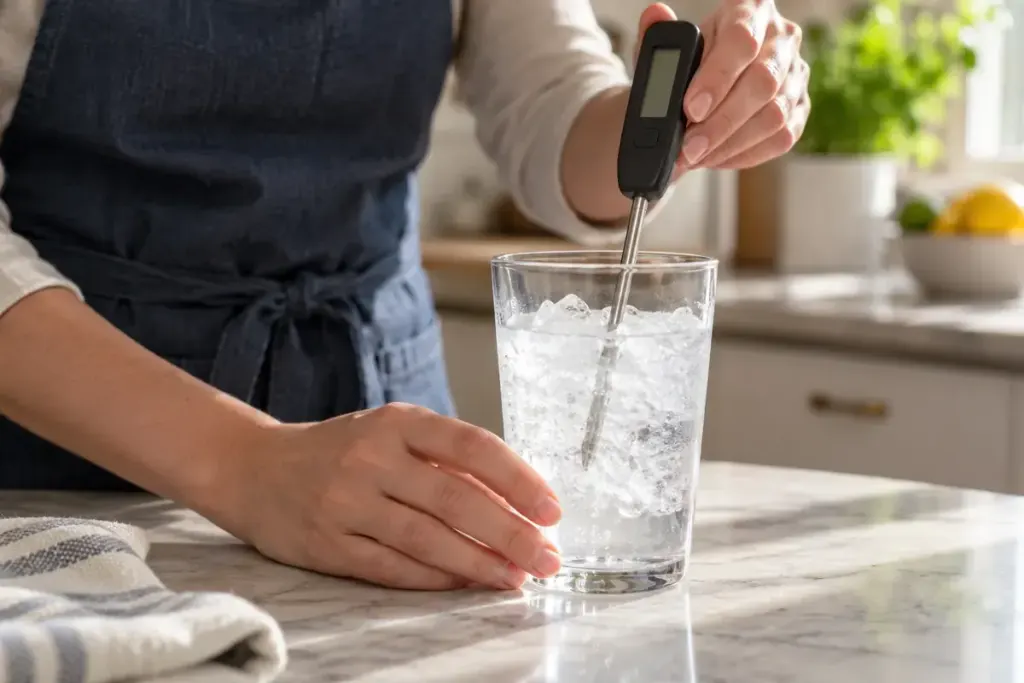
A digital display can make a temperature reading look precise even when the instrument needs checking. An ice-water test provides a practical reference near freezing, but the result depends on the mixture, probe placement and the thermometer’s instructions.
The USDA Food Safety and Inspection Service’s thermometer guide describes an ice-water method and directs users to the manufacturer for adjustment. Some instruments can be adjusted; others require service or replacement when outside their specification.
Make a reference mixture, not just cold water
Use a clean container with plenty of ice and drinking water, stir it and position the sensing area in the mixture according to the instrument’s immersion requirements. Avoid contact with the container’s sides or bottom. Allow the reading to stabilise as directed.
An appropriate ice-water mixture should be close to 0°C, or 32°F. A glass containing one melting cube in mostly warm water is not the same reference. Confirm the displayed unit before deciding that a reading is wrong.
Record the result before changing anything
Write down the thermometer identifier, date, reference method and observed reading. Compare the result with the manufacturer’s stated accuracy and procedure. A one-point check does not establish accuracy across the entire cooking range.
If the result is outside the acceptable specification, follow the adjustment or service instructions. Do not invent a permanent correction factor for every future temperature without a validated procedure. Use a reliable instrument for food-safety decisions while the questionable one is resolved.
Clean the probe before and after the check and keep electronic parts out of water unless designed for immersion. A short maintenance record is especially useful in a shared kitchen: it tells the next person whether the thermometer was checked, how it was checked and what action followed.