
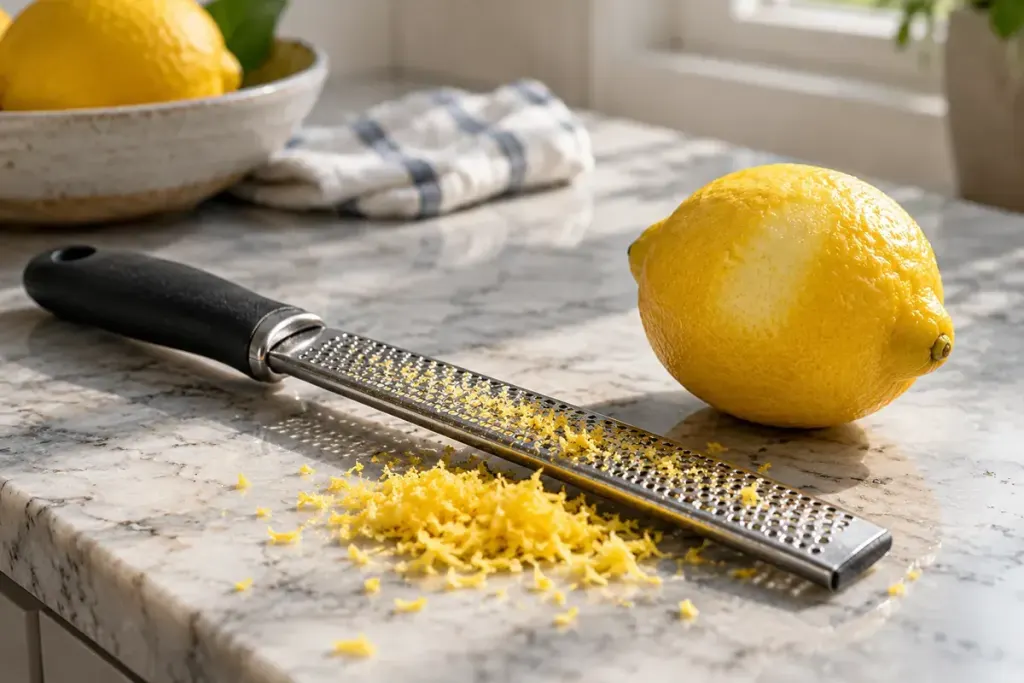
A lemon can look thoroughly grated while contributing more bitter white pith than fragrant zest. The useful part for many recipes is the thin coloured surface, so control matters more than pressure.
Microplane’s handling guidance recommends gentle passes and turning the fruit to avoid digging into the pith. Follow the instructions for your particular tool, including its cleaning and blade-cover requirements.
Choose the texture before choosing the tool
A fine rasp produces small particles that disperse through a batter or dressing. A channel-style zester makes longer strands, useful when a visible garnish is wanted. A vegetable peeler creates broad strips that may need further trimming or cutting. These results are not interchangeable in every recipe.
Wash and dry the fruit before starting. Work over a plate or bowl so you can see what you have collected. Zest before squeezing when the recipe needs both; a whole fruit is usually easier to hold steadily than a collapsed half.
- Make a light pass over a small area.
- Look at the exposed surface rather than immediately repeating the stroke.
- Rotate to a fresh coloured section when the pale layer appears.
- Stop when you have the measured amount the recipe requests.
Cleaning and storage
Use the handle and any supplied guard as intended. Do not scrape trapped zest from sharp teeth with a fingertip. A suitable brush or utensil, used according to the manufacturer’s directions, is a better cleaning approach.
For a crowded kitchen drawer, a protective cover is part of storage rather than an optional accessory. Dry the tool before putting it away and check that its handle and frame remain secure.
If zest keeps coming off in wet clumps, check the tool’s condition and your technique before pressing harder. The aim is an even, shallow removal of the coloured skin. A small amount prepared carefully is more useful than stripping the whole fruit because it happens to be in your hand.