
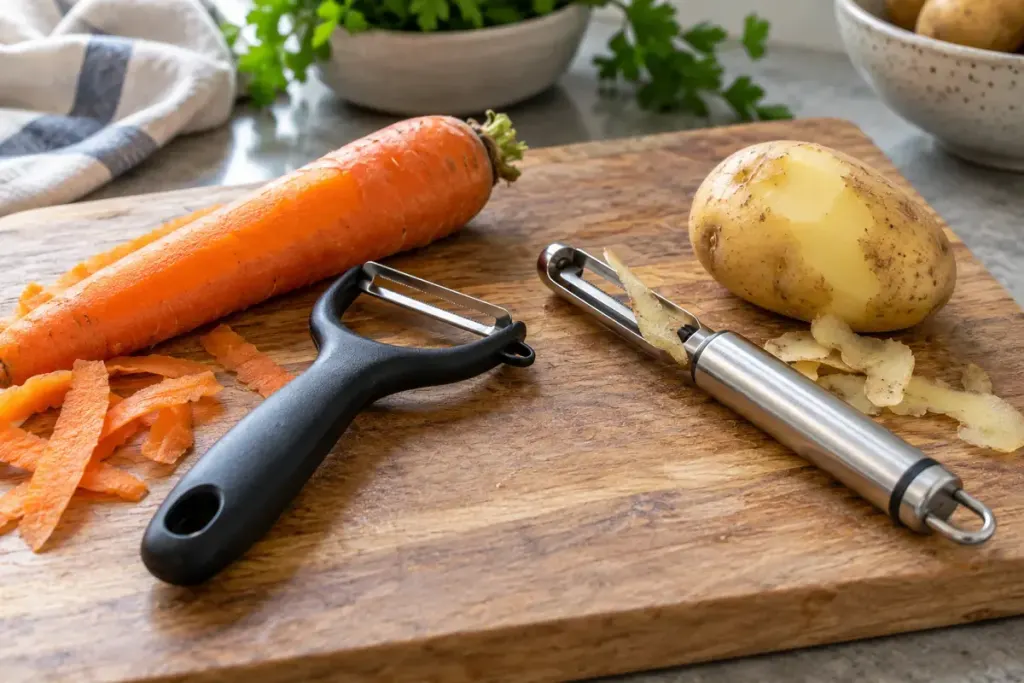
A peeler can look insignificant beside a knife set, yet it may be the tool your hand repeats hundreds of times during preparation. The best shape for you is one you can control comfortably with the foods you actually peel.
Two common forms are the straight peeler, with the blade along the handle, and the Y-shaped peeler, with a blade across the top. Neither shape is universally better. Blade design, grip size, handedness and the direction of movement all affect how it feels.
Try the movement before judging the speed
Start with a stable vegetable and a clear work surface. Follow the tool’s instructions and keep fingers out of the blade’s path. Use controlled strokes rather than pressing harder to compensate for a dull or unsuitable blade.
Notice whether your wrist stays comfortable and whether the handle becomes slippery when wet. A larger grip may suit one person while feeling awkward to another. If possible, handle a demonstration tool before buying, without touching an exposed blade.
- Check whether the blade suits your dominant hand.
- Consider the vegetables you prepare most often.
- Look at how easily peelings clear the blade.
- Read the cleaning and storage instructions.
For a practical comparison, peel similar portions on separate occasions and notice fatigue, control and waste. There is no need to race. A tool that removes slightly thinner strips but makes your hand ache may not improve the overall task.
Clean the blade carefully and store it so someone reaching into a drawer will not meet an exposed edge. Replace a damaged tool rather than bending the blade back into place.
If peeling causes persistent pain or you have limited hand function, consider adapted equipment and appropriate professional advice. The useful purchase is the one that fits your movement, not the one described as fastest in a demonstration.