
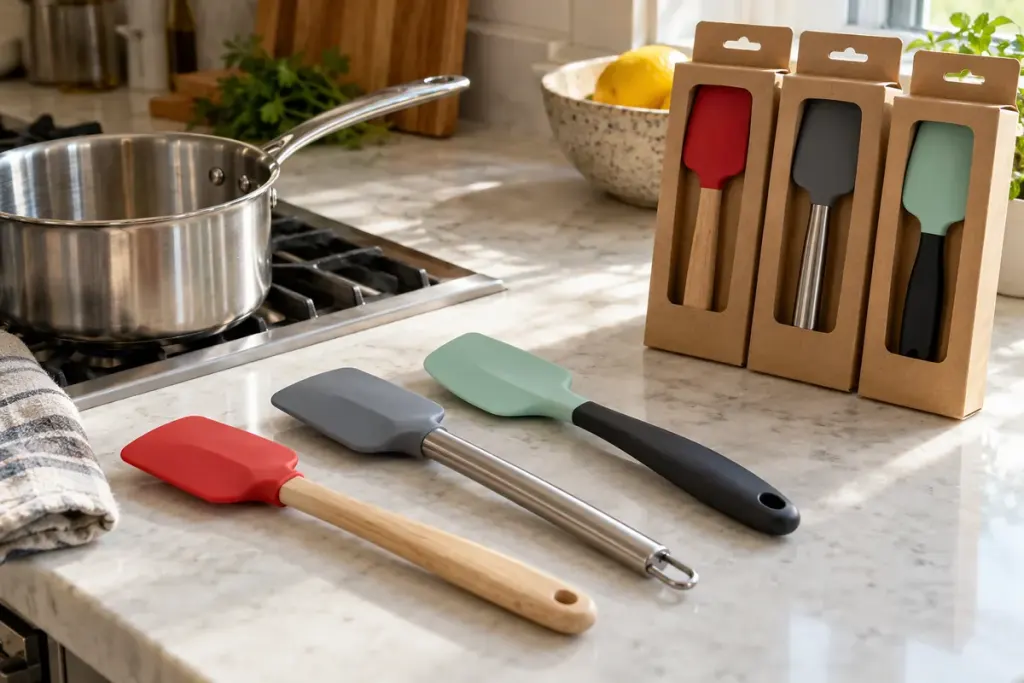
A spatula’s packaging advertises a high temperature limit. That does not automatically mean every part of the utensil can sit against a hot pan, go into an oven or tolerate direct flame. The wording and construction matter.
For example, OXO’s silicone spoon-spatula description attaches its heat-resistance statement to the head and neck. This is a product-specific example of why a material name alone is not a complete use instruction.
Read the claim as a set of conditions
Identify which parts are silicone, which are another material and whether the tool has joints or a removable head. Look for instructions about heat exposure, cleaning and dishwasher use. Do not transfer a rating from one product to another that merely looks similar.
A heat-resistant stirring head is not necessarily designed to rest unattended on the hottest part of cookware. Direct flame and contact with a heating element are different from ordinary stirring in food. Follow the manufacturer’s permitted use rather than treating the highest printed number as a general invitation.
Inspect the tool for cracks, looseness or damage that could affect cleaning or safe handling. If the product is deteriorating, a temperature claim does not make continued use sensible.
Choose for the task you actually perform
For scraping a mixing bowl, flexibility and shape may matter most. For cooking over heat, the construction, grip and specific heat instructions become more important. A very flexible tool can also feel different when moving a dense mixture.
Keep the product information or model number with a simple kitchen-equipment note. That makes it easier to check care instructions later instead of guessing whether a particular handle was dishwasher-safe.
When comparing tools, ask “Which part is rated, under what conditions, and for what use?” Those questions are more useful than comparing temperature numbers in isolation. The right utensil is one whose whole design suits the job, with instructions you can follow during an ordinary cooking session.