
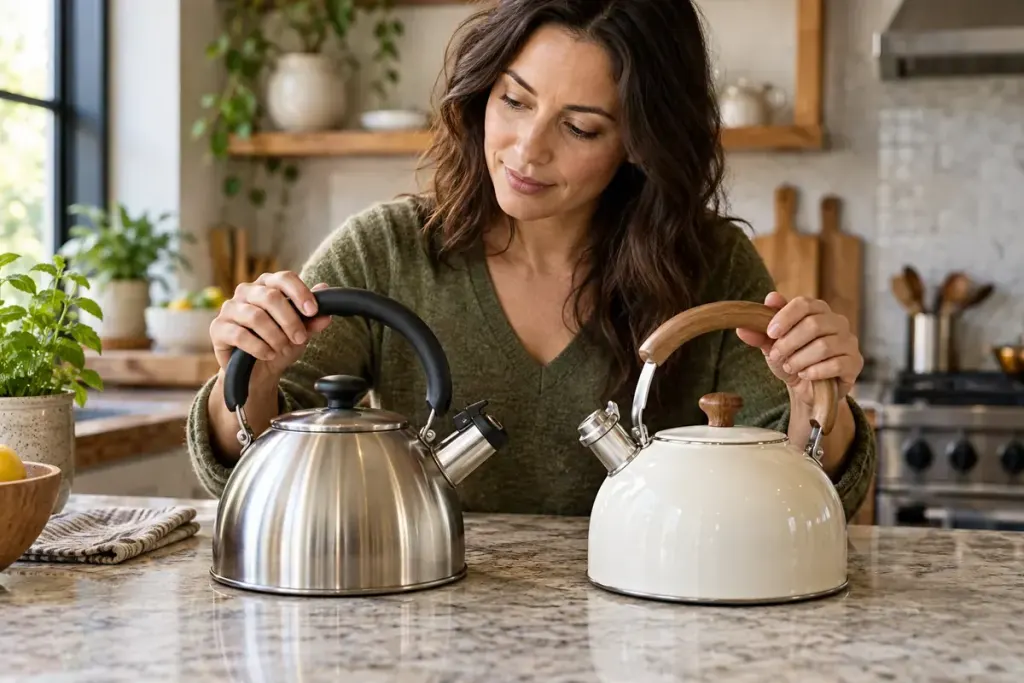
An empty kettle feels comfortable in the shop. Filled for several cups, it becomes a different object to lift and pour. The handle deserves a closer look before appearance or capacity decides the purchase.
Think about the amount you normally boil
Start with your ordinary use rather than the largest possible serving. Read the minimum and maximum fill instructions. A larger kettle may offer capacity you rarely need while adding weight and cupboard demands.
Where a safe demonstration is available, assess the grip and balance with cool water, following the seller’s permission and the product instructions. Do not improvise a hot-water test in a shop. Notice whether your fingers have comfortable clearance and whether the lid and spout arrangement make controlled pouring possible.
Check the whole lifting movement
Consider where the kettle will sit, how it is filled and where the cup is placed. A handle that feels fine at waist height may be awkward on a high shelf or a crowded worktop. Keep the pouring route clear and use a stable surface.
For electric kettles, follow the maker’s instructions about the base, cord and water exposure. For stovetop models, check heat-source compatibility and how the handle is intended to be protected from heat. Do not assume a handle remains cool because it looks like plastic or has a decorative cover.
If lifting or gripping is difficult, ask about equipment designed for your needs rather than adapting an unsuitable kettle with an improvised strap or grip. A smaller suitable vessel or an appropriate assistive device may be worth discussing with a qualified adviser.
Keep the successful details
Record capacity, model and the handling features that worked for you. Check care and replacement-part information before discarding the packaging.
The best handle is part of a usable routine: filling, lifting, pouring and returning the kettle safely to its place. Assess that sequence, and the purchase becomes less about how the kettle looks when empty and more about how it behaves when you actually need a drink.