Kitchen Equipment
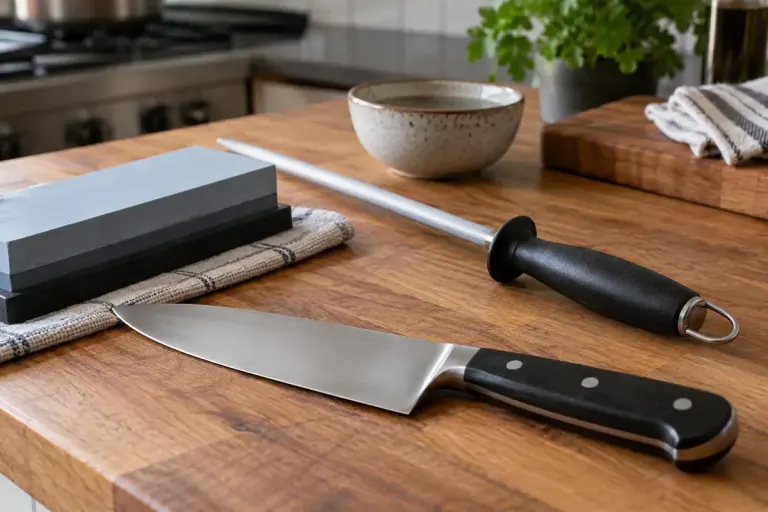
Honing and Sharpening Are Different Jobs for a Kitchen Knife
Honing maintains an edge differently from sharpening, which removes material to form a new edge. Match the method to the knife.

Dinnerware, serving ideas and care for everyday kitchen essentials.
Honing maintains an edge differently from sharpening, which removes material to form a new edge. Match the method to the knife.
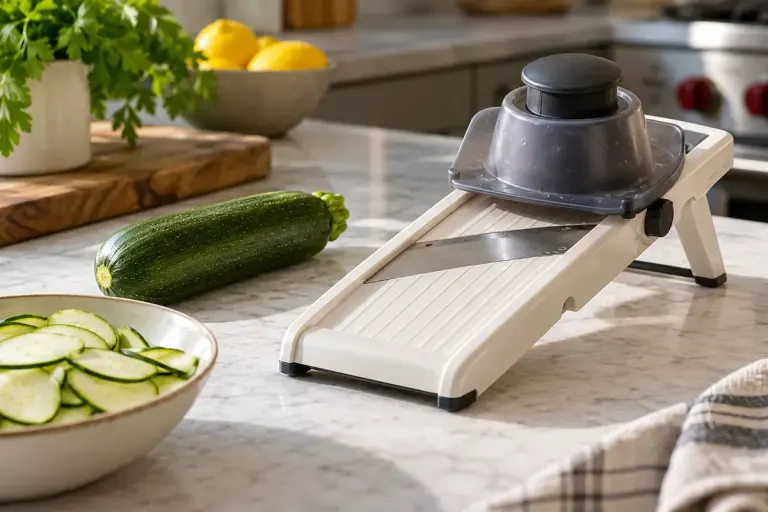
Set up a mandoline with its food holder, stable support and storage plan before slicing, and stop when a small end piece can no longer be held safely.
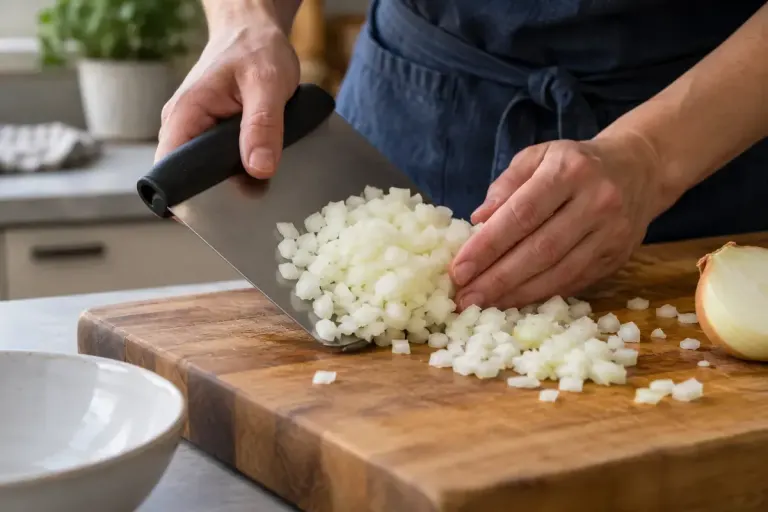
Use a bench scraper to transfer chopped ingredients from board to bowl, keeping the knife edge out of the scraping job and the work area under control.
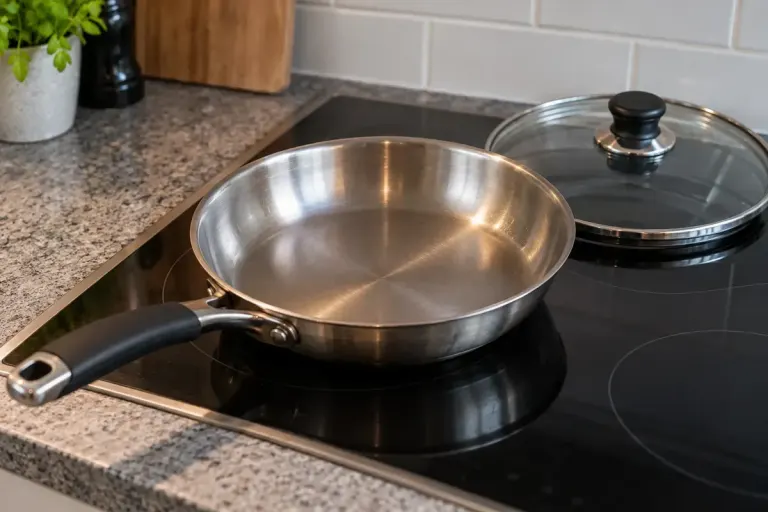
Before moving a pan into the oven, check the limits of its body, handle, lid and knob. The lowest permitted limit governs the assembled cookware.
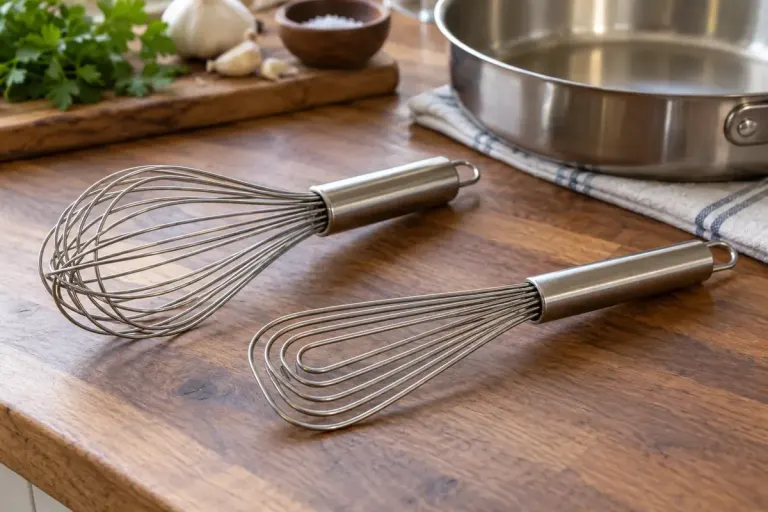
Compare the shape and reach of balloon and flat whisks against the bowl or pan where you plan to use them.
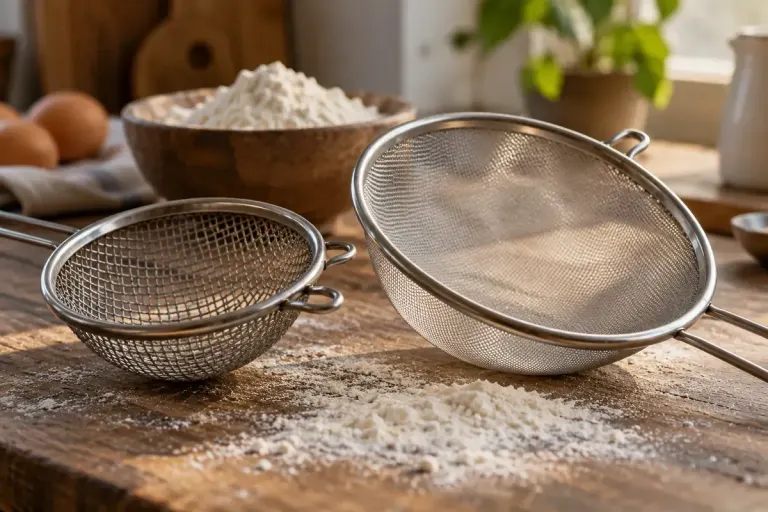
Match a kitchen sieve’s mesh to the ingredient and desired result. A fine screen, coarse sieve and colander do not separate food in the same way.
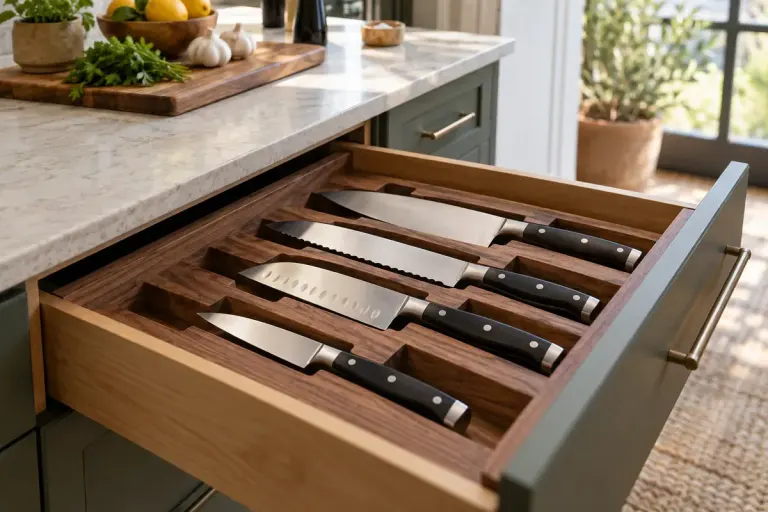
Arrange sharp kitchen tools so handles are identifiable and reachable, blades are protected and storage does not create a hidden reaching hazard.
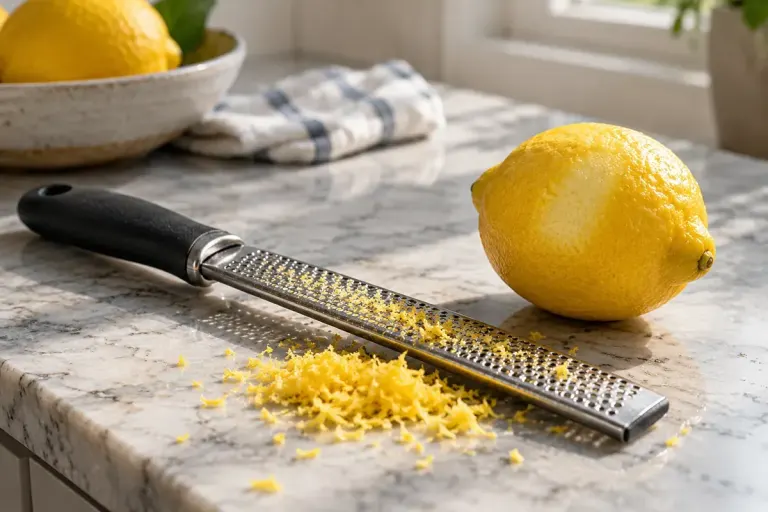
Use a fine citrus zester with light passes, rotate the fruit before reaching the pith and choose a tool that suits the texture your recipe needs.
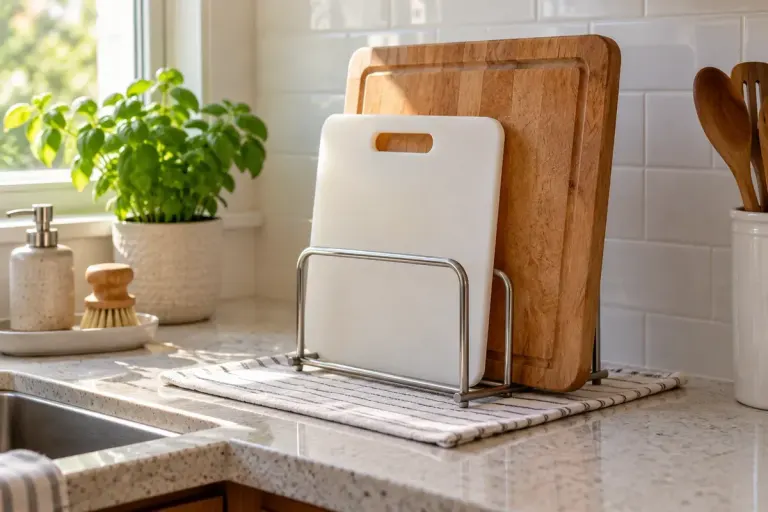
Cutting-board care depends on the actual product. Check dishwasher instructions before heat, water and detergent damage a board that should be washed by hand.